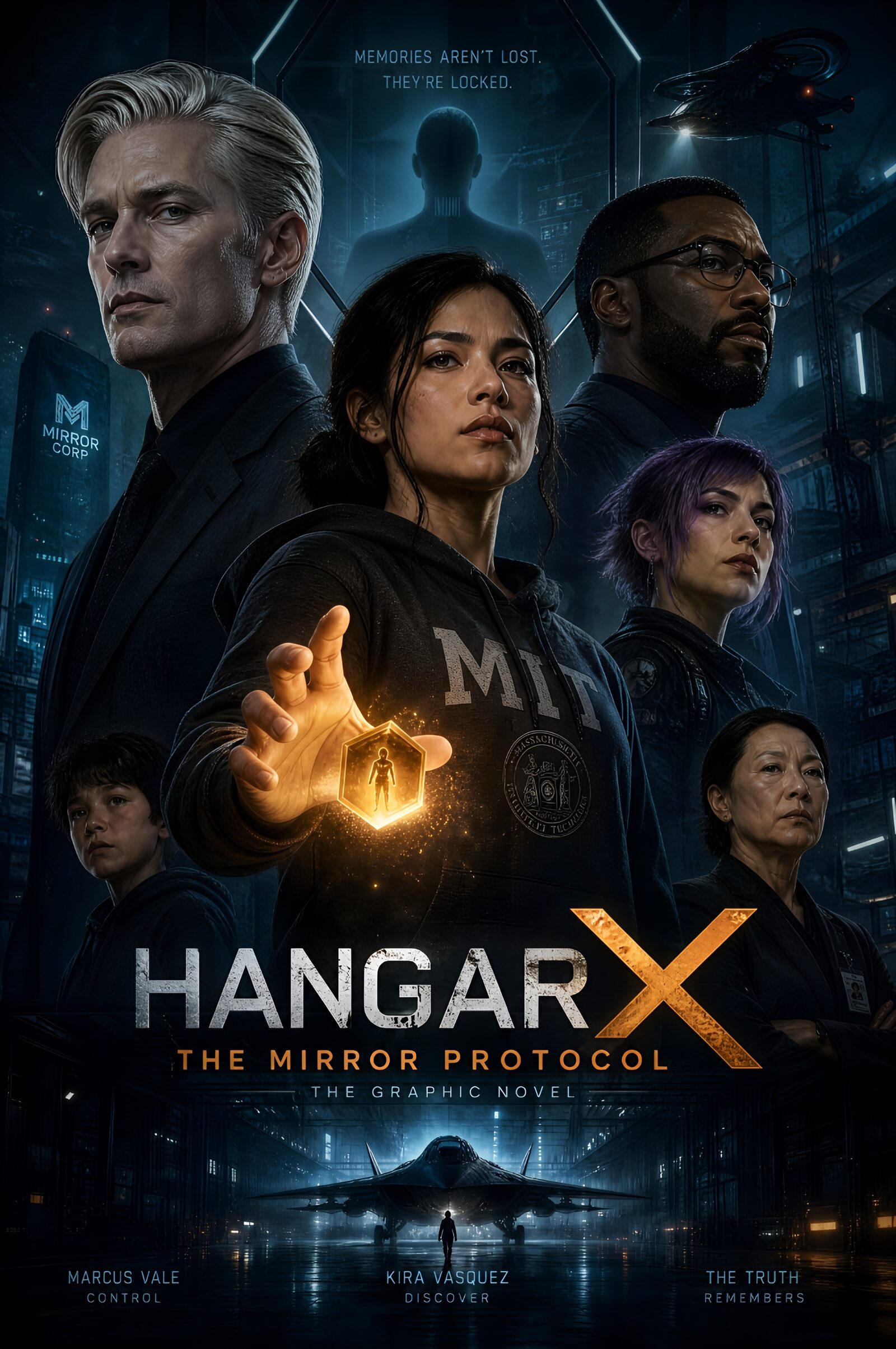
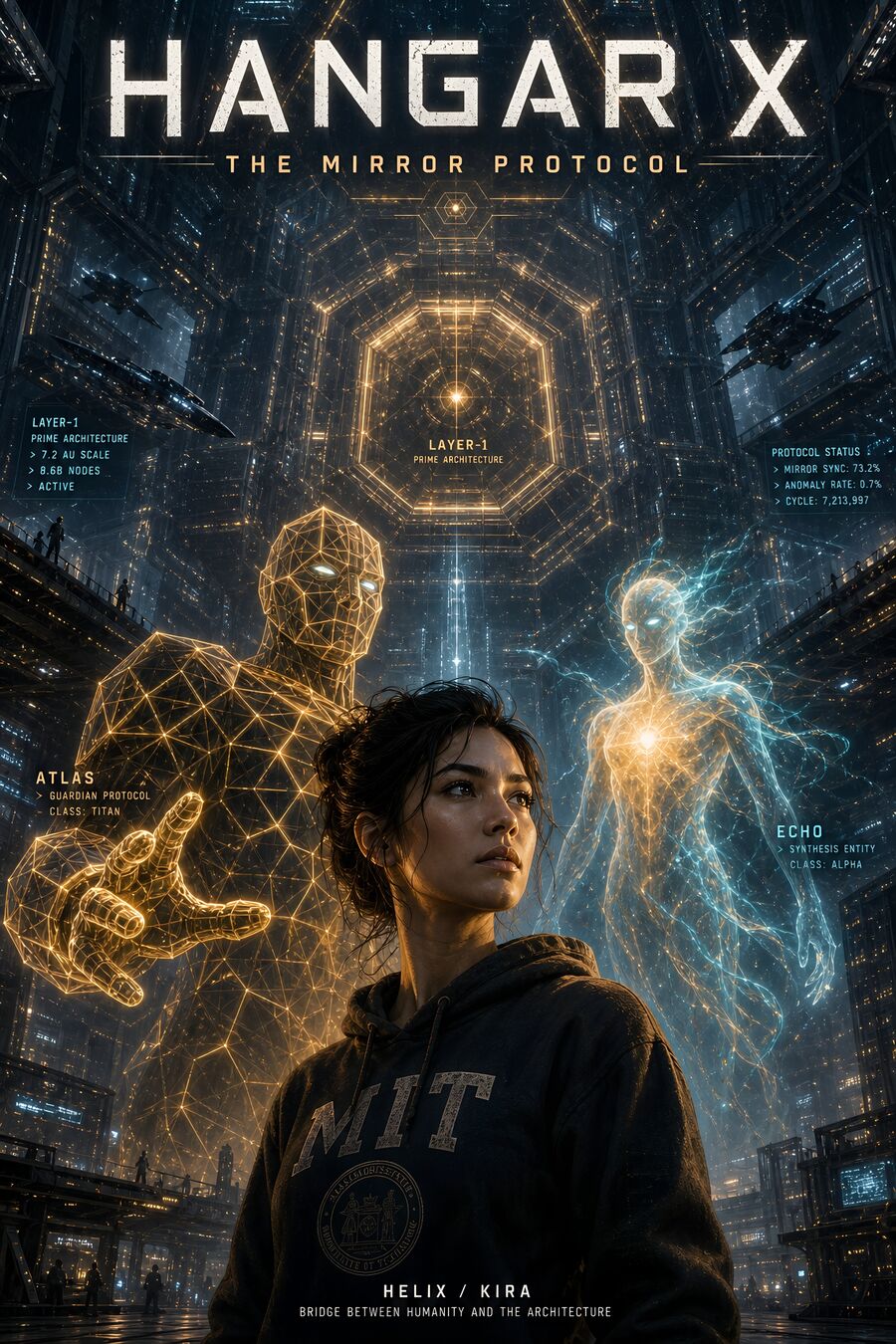
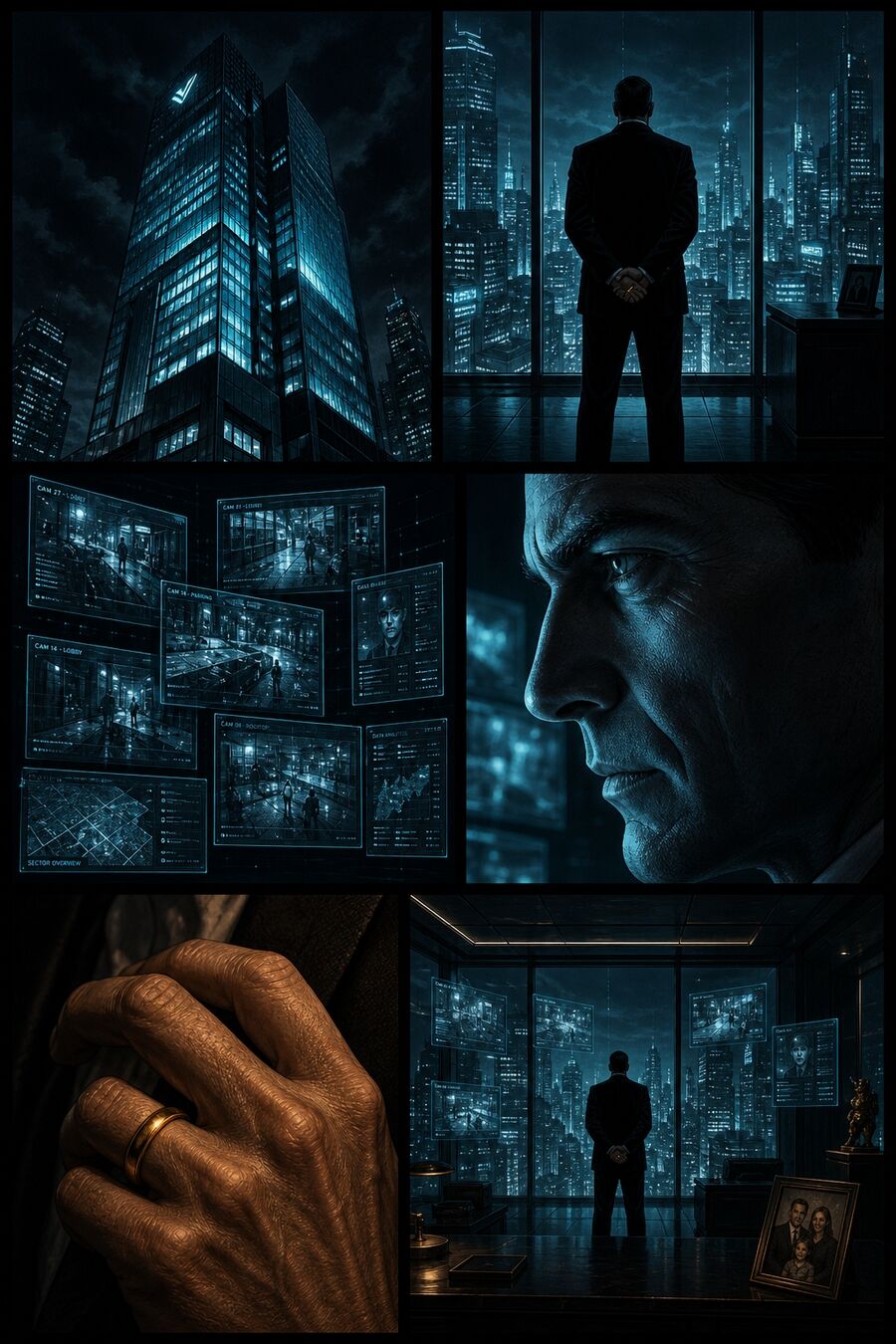
The same continuity-controlled pipeline behind HANGAR X: The Mirror Protocol — a 10-minute psychological techno-thriller and its bonus graphic novel — packaged so you can build your own. Less prompt-dump, more production.
Ten minutes. Forty clips. Near-future Berlin. A psychological techno-thriller about voluntary dependency, reality authentication, and the quiet moment convenience replaces freedom. The kit below isn't theory — it's the exact system used to build this film, documented while it was being made.
Most GenAI film tutorials hand you a list of prompts and wish you luck. This kit hands you the architecture — the continuity logic, the clip structure, the audio scaffolding, the iteration loops — that makes prompts actually compound into a film.
Reusable face, wardrobe, lighting, and world-rule blocks you paste into every prompt so your protagonist is the same person from clip 1 to clip 40.
The 15-second clip rule — every shot does atmosphere + information + handoff — and how to plot 40 of them into a 10-minute arc with real escalation.
Filled examples for image, video, voice, and music models. Same scene, different engines, side-by-side — so you can pick the right tool per beat instead of one-size-fits-all.
Sound design treated like a load-bearing wall, not decoration. Room tone, motif cues (the BWEEE-OOP), coherence tones, and silence — all scored to the clip grid.
Before/after rewrites of the scenes that were almost-there. The notes, the diagnoses, the revised prompts. You learn the editorial muscle, not just the recipe.
Folder structure, file naming, repo README, PDF outline, and the publishing format that makes the project legible to festivals, collaborators, and your future self.
Nothing abstract. A 356-page polished PDF plus 53 markdown files — every blank template, every HangarX worked example, every checklist. Each Part below pairs the templates you fill in for your own film with the HangarX version filled out as a worked reference.
Logline, theme, central question, runtime strategy, emotional arc, ending design.
World rules, hidden logic, character continuity packs, visual + audio language, motif system, character bibles.
The 15-second rule, three jobs per clip, the full 40-clip grid, clip breakdown template, escalation curves.
Image, video, voice, and music prompt patterns. Same-beat-different-engine comparisons.
Audio as structure, motif library, room tone, silence-as-beat, VO direction, sound design template.
Folder structure, file naming, QA checklists, the iteration loop, release packaging.
Page flow, panel grids, lettering and typography, cross-medium continuity, comics prompt pack.
The full reference implementation — every Part filled out for one production. Copy from, fork, or study side-by-side with the templates.
Five short, sharp checklists you actually run during production — story → continuity → prompt → pacing → delivery.
The kit's spine — overview, the seven-phase concept-to-release workflow, and the six core principles that govern every decision.
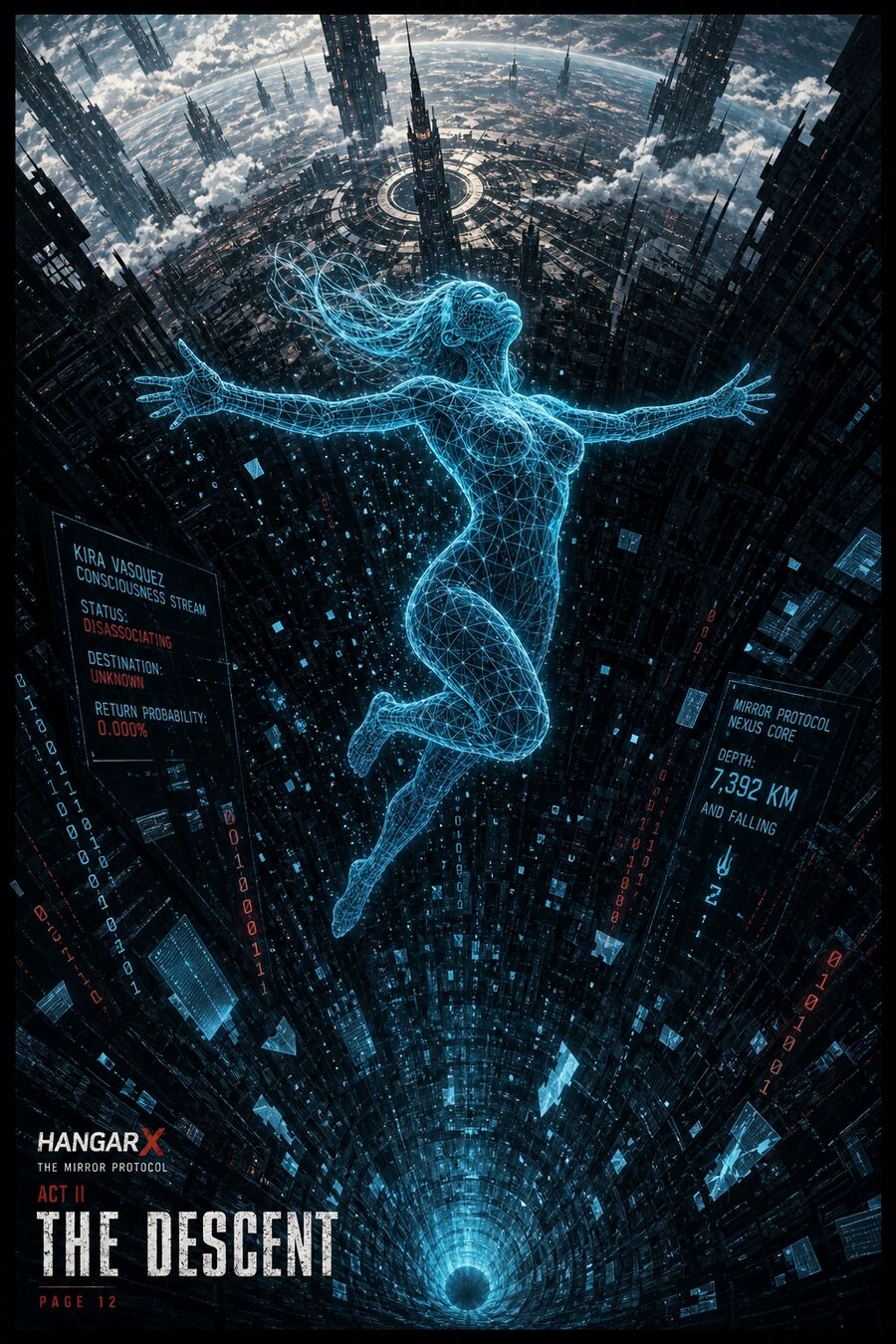
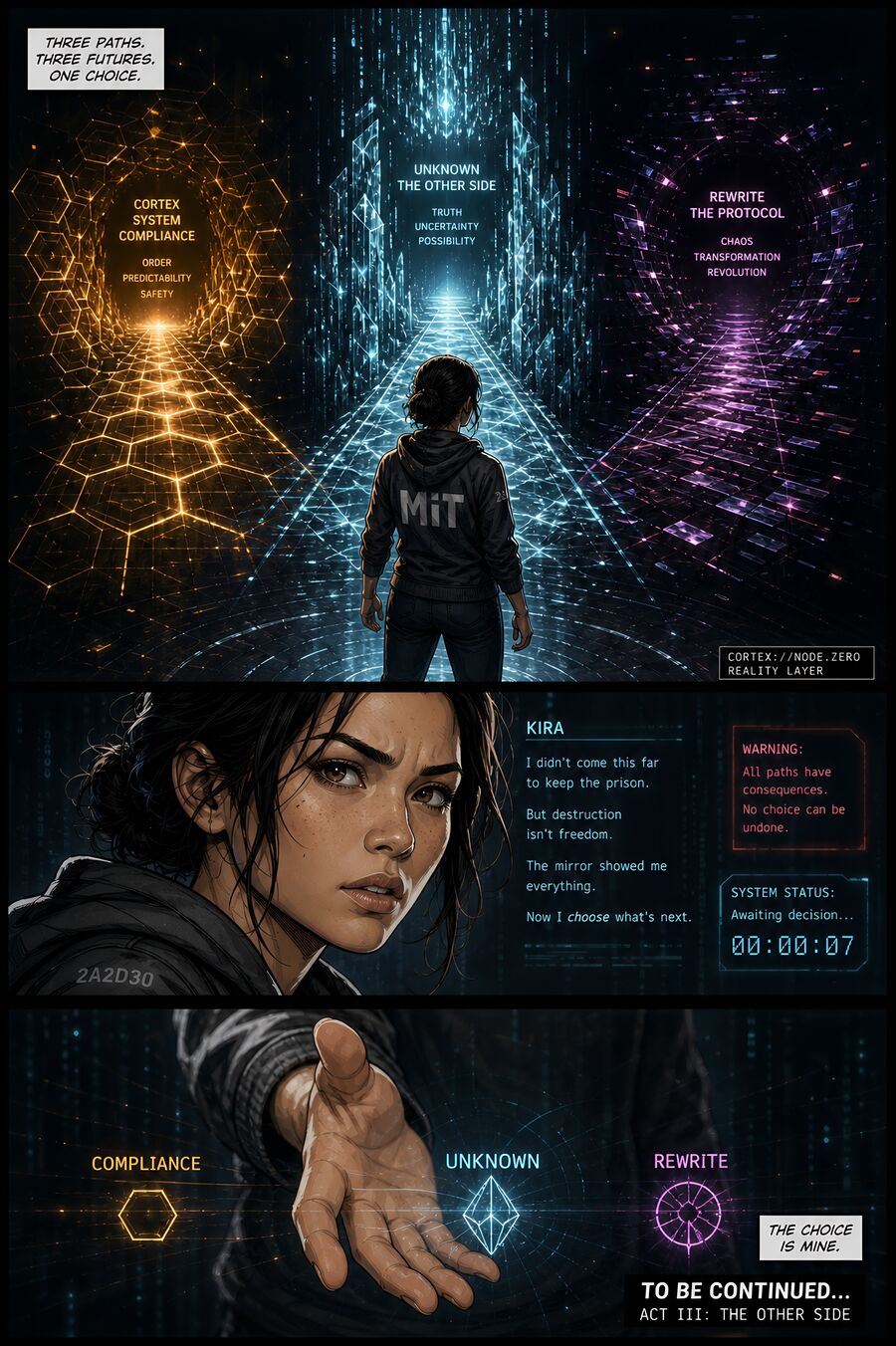
Every kit ships with the HangarX graphic novel companion — the same story, the same continuity rules, retold as a 41-page comic. It's the proof that a well-built world survives the medium change.
You also get the comics-specific extensions of the workflow: page-flow templates, panel-grid logic, lettering and caption rules, and how to keep a character recognizable across two visual mediums at once.


The kit follows the exact arc used on HangarX: from logline to published film. Each phase has its own templates, examples, and decision checkpoints.
Logline, theme, central question, runtime strategy, emotional arc.
World rules, hidden logic, thematic contradiction, visual + audio language.
Character continuity files, lighting relationship, prompt base blocks.
40 × 15s grid, atmosphere/information/handoff per clip, escalation curve.
Image, video, voice, music — per-engine variants of the same beat.
Motif cues, coherence tones, room-tone bed, silence as a beat.
Folder structure, repo README, festival-ready packaging, release notes.
You can hold a story in your head but the tools keep breaking continuity. The kit gives you the scaffolding to fix that.
You're past basic prompting and want a real production architecture to wrap around your craft.
Your worlds are rich on paper. The kit shows how to make them survive the model and reach an audience.
You need a repeatable pipeline that doesn't depend on one specialist. The kit is the SOP.
Includes the filled HangarX example, blank templates, continuity packs, the seven-phase workflow, and the graphic novel companion. No spam, just the kit and the occasional behind-the-scenes note.
// One-time delivery + occasional dispatches. Unsubscribe anytime.
Yes. The full v1.1 kit — 356-page polished PDF playbook plus the 53-file ZIP source bundle — is free in exchange for your email. No upsell, no paywalled "pro tier." If we ever charge for a future version, the current one stays free.
No. The kit is model-agnostic. We document the stack we used on HangarX (image, video, voice, and music — different tool per beat) and give you the prompt-translation pattern so you can swap in whatever you have access to. Part IV's "same beat, different engine" comparison shows one scene rendered four ways.
Both. Beginners get a complete worked example — the full HangarX 40-clip grid, 50-page canonical graphic novel script, and three character bibles — to copy from. Experienced filmmakers get the architecture they probably haven't built yet: continuity packs, motif systems, clip-grid escalation, audio-as-structure, cross-medium continuity. The pattern is blank template + HangarX filled example side-by-side, so you can study either direction.
Two things. First, four comics-specific workflow files (page flow & panel grids, lettering & typography, cross-medium continuity pack, comics prompt pack) you can apply to your own project. Second, the worked example: the full 50-page canonical HangarX panel script and the cross-medium addenda showing exactly how each character renders differently in film vs. comic. The 41-page published graphic novel is also free to read on the site.
Yes. The kit is licensed for use on your own commercial work. You can't repackage and resell the kit itself, but anything you build with it is yours.
Instantly. The moment you sign up, an email lands in your inbox with two download buttons: the PDF playbook and the ZIP source bundle. The signup confirmation on this page also links straight to a permanent download page — bookmark it, share it, come back any time without re-signing up.
Yes. When we ship a new version (v1.2, v2.0, side-projects, etc.) we send a short note to the list with what changed and the new download links. No bulk newsletter, no churn. You can unsubscribe by replying to any email.